The short version
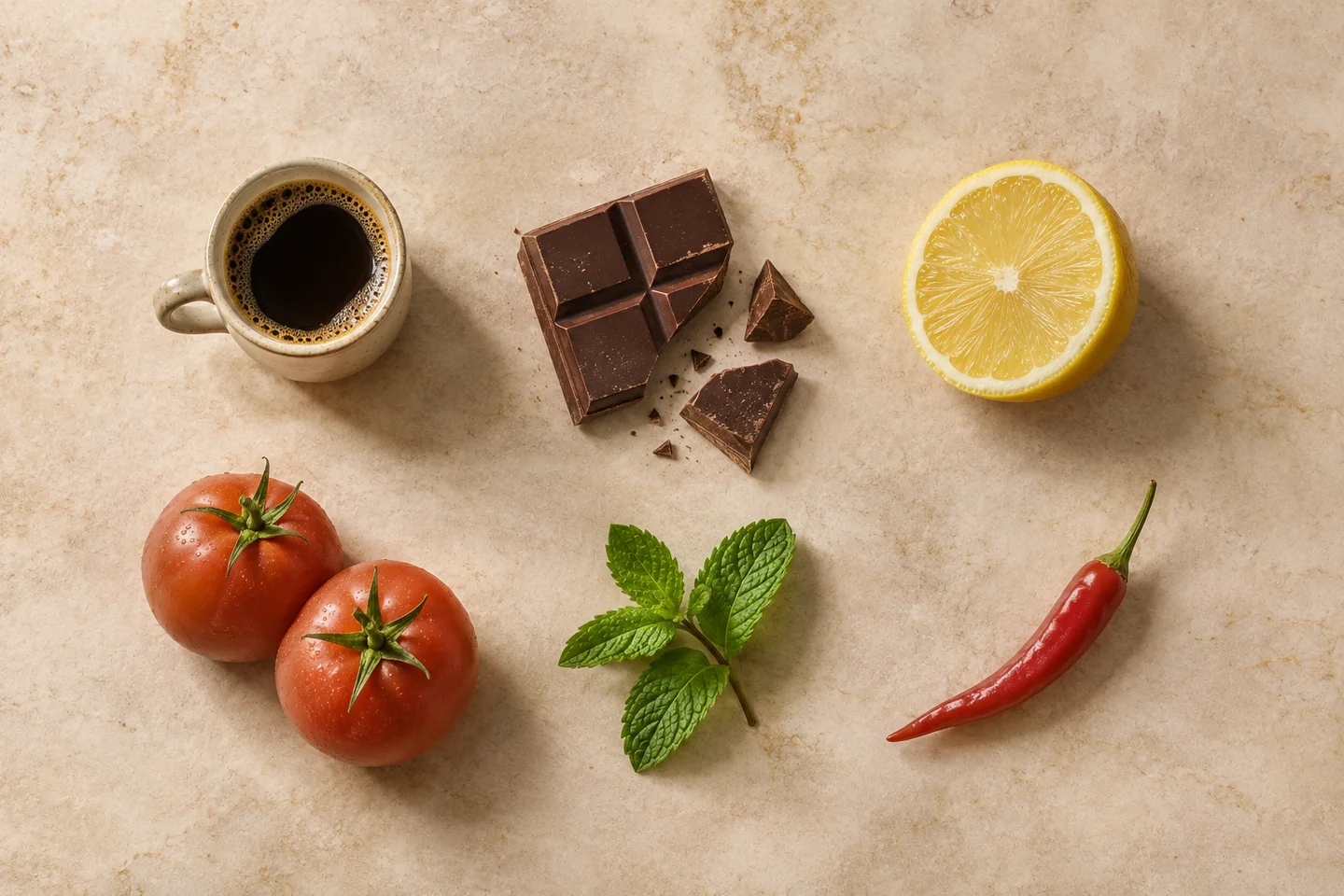
- Commonly linked foods and drinks include coffee, chocolate, citrus fruits, tomatoes, mint, spicy food, high-fat food and alcohol.
- Triggers differ from person to person.
- The NHS also suggests smaller, more frequent meals.
The foods and drinks most often named
NIDDK lists these as commonly linked to GERD symptoms, and the NHS names most of the same ones:
- Acidic foods such as citrus fruits and tomatoes
- Coffee and other sources of caffeine
- Chocolate
- Mint
- Spicy foods
- High-fat foods
- Alcohol
It is not only food
The NHS says lots of people get heartburn from time to time, often for no obvious reason. Things that can cause it or make it worse include being overweight, smoking, pregnancy, stress and anxiety, and some medicines such as anti-inflammatory painkillers like ibuprofen. Do not stop a prescribed medicine without speaking to a doctor first.
Portion size counts too
If symptoms follow big meals, try the NHS suggestion of smaller, more frequent meals. Splitting one large plate into two sittings is an easy way to test it.
How to find your own triggers
Our suggestion is to log what you ate, the portion, the time, and when symptoms started, for a week or two. NIDDK advises talking with your doctor about foods or drinks that seem to increase your symptoms, and a doctor may recommend reducing or avoiding them to see if symptoms improve.
IBS Tracker: Gut & Food Diary
Our app logs reflux symptoms, food and medication notes together, then lets you review trends and export them.
We make this app, so we are not a neutral source. Free download with in-app purchases. Requires iOS 15.1 or later. The comparison shows two other approaches, so you can choose for yourself.
When to talk to a doctor
The NHS says to speak to a pharmacist if heartburn keeps coming back, and to see a GP if lifestyle changes and pharmacy medicines are not helping or if you have heartburn most days.
See a GP as well if you have other symptoms, such as:
- food gets stuck in your throat
- you are frequently being sick
- you are losing weight for no reason
This article is general information, not medical advice or a diagnosis.