The short version
- No more than 3 cups of tea, coffee or other caffeinated drinks a day.
- No more than 3 portions of fresh fruit a day, with a portion being 80 g.
- At least 8 to 10 drinks of fluid a day, around 1.5 liters, such as water or non-caffeinated drinks.
For bloating, cramps and gas
The NHS suggests eating oats regularly and up to 1 tablespoon of linseeds a day. It also suggests avoiding foods that are hard to digest and products containing the sweetener sorbitol:
- Cabbage
- Broccoli
- Cauliflower
- Brussels sprouts
- Beans
- Onions
You may not need to cut all of these, and the list does not replace individual advice. A pharmacist can tell you about medicines that may help.
For constipation
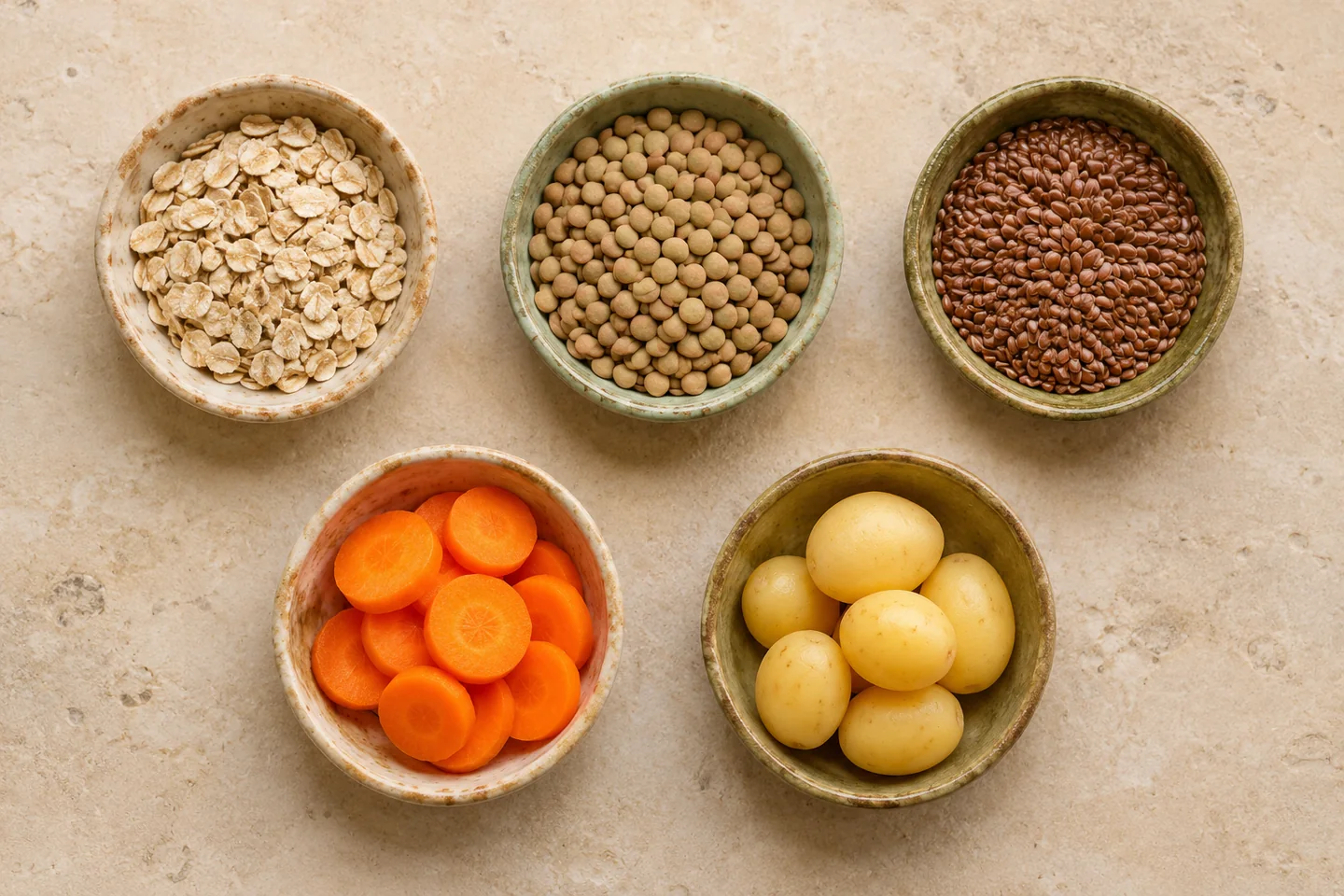
The NHS suggests drinking plenty of water and increasing soluble fiber. The foods it names are oats, pulses, carrots, peeled potatoes and linseeds. Its general constipation advice is to increase fiber gradually.
For diarrhea
The NHS suggests cutting down on high-fiber foods such as wholegrain bread and brown rice, nuts and seeds, and avoiding sorbitol. If you keep getting diarrhea, drink plenty of water to avoid dehydration.
Find out what matters for you
The NHS is clear that no single diet works for everyone with IBS. Notice that the advice on fiber even points in different directions depending on the symptom, which is one reason a food and symptom diary is on its list.
IBS Tracker: Gut & Food Diary
Our app logs food, symptoms and medication notes together, so you can see which of these changes seem to matter for you.
We make this app, so we are not a neutral source. Free download with in-app purchases. Requires iOS 15.1 or later. The comparison shows two other approaches, so you can choose for yourself.
When to talk to a doctor
The NHS says to see a GP if you think you might have IBS and have had symptoms for over 4 weeks, if diet changes and pharmacy medicines are not helping, or if you need to avoid lots of different foods to control symptoms.
Ask for an urgent appointment if:
- you have lost a lot of weight for no reason
- you are bleeding from your bottom or have bloody diarrhea
- you find a hard lump or swelling in your tummy
- you have shortness of breath, noticeable heartbeats and skin that is paler than usual
This article is general information, not medical advice or a diagnosis.